Buy gleitschirmfliegen.eu ?
We are moving the project
gleitschirmfliegen.eu .
Are you interested in purchasing the domain
gleitschirmfliegen.eu ?
domain@kv-gmbh.de · 0541-91531010
Buy gleitschirmfliegen.eu ?
'Salts or molecules?'
Salts are compounds formed from the reaction of an acid and a base, while molecules are made up of atoms bonded together. Salts are ionic compounds, meaning they are made up of ions, while molecules can be either ionic or covalent compounds. Salts have a specific crystalline structure and are often soluble in water, while molecules can have a wide range of physical properties and solubilities. Overall, salts and molecules are distinct types of chemical compounds with different structures and properties. **
Which of the following molecules are dipole molecules and why?
Molecules that have a dipole moment are considered dipole molecules. A dipole moment occurs when there is an uneven distribution of electron density within a molecule, resulting in a partial positive and partial negative charge. For example, molecules like water (H2O) and ammonia (NH3) are dipole molecules because of their polar covalent bonds, which create a separation of charge within the molecule. On the other hand, molecules like carbon dioxide (CO2) and methane (CH4) are nonpolar and do not have a dipole moment because the electronegativity of the atoms cancel each other out, resulting in a symmetrical distribution of charge. **
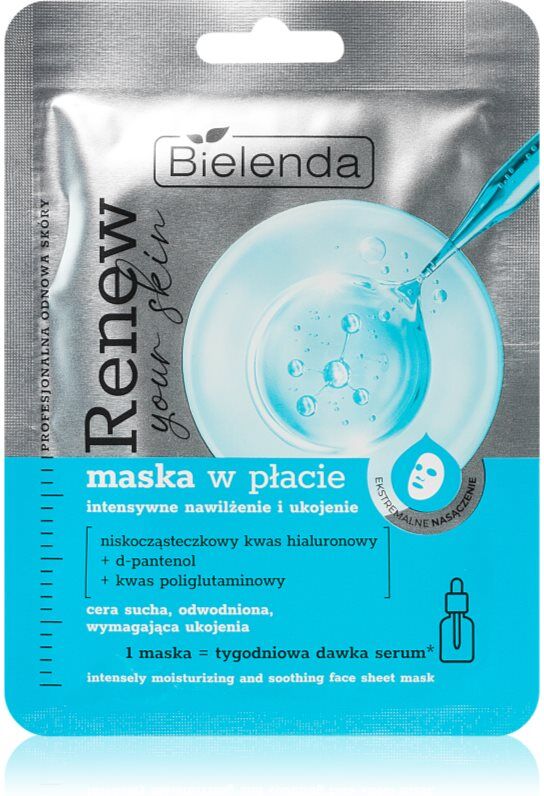

Similar search terms for Bielenda-Beauty-Molecules-moisturising
Top-Angebote
Products related to Bielenda-Beauty-Molecules-moisturising:
-
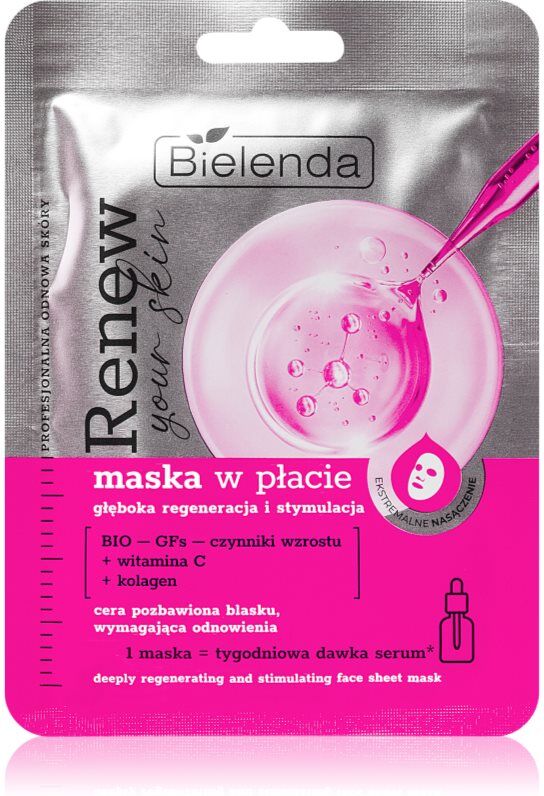
Bielenda Renew Your Skin nourishing sheet mask 18 gBielenda Renew Your Skin, 18 g, Sheet masks for Women, Does it feel as though your skin isn’t quite right and needs something more than just the care provided by a cream? This face mask from BielendaRenew Your Skin is the perfect product to enrich your skincare routine – it pampers the skin and delivers an intensive treatment, bringing about an instant improvement in the skin’s appearance. Characteristics: beautifies the appearance of skin in general hydrates deeply and nourishes intensively restores elasticity and a feeling of comfort to skin leaves skin silky soft to the touch How to use: Carefully remove the mask from the packaging and apply to a cleansed face. Leave to act for the time indicated on the packaging.1,90 £*Shipping: 3,99 £Secure redirect to the provider
-
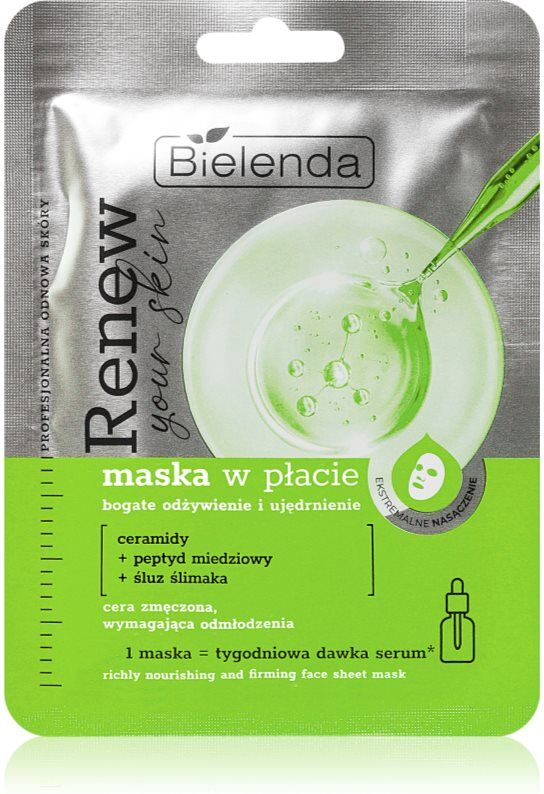
Bielenda Renew Your Skin sheet mask with regenerative effect 18 gBielenda Renew Your Skin, 18 g, Sheet masks for Women, Does it feel as though your skin isn’t quite right and needs something more than just the care provided by a cream? This face mask from BielendaRenew Your Skin is the perfect product to enrich your skincare routine – it pampers the skin and delivers an intensive treatment, bringing about an instant improvement in the skin’s appearance. Characteristics: beautifies the appearance of skin in general regenerates the skin barrier leaves skin silky soft to the touch does not irritate the skin restores elasticity and a feeling of comfort to skin How to use: Carefully remove the mask from the packaging and apply to a cleansed face. Leave to act for the time indicated on the packaging.1,90 £*Shipping: 3,99 £Secure redirect to the provider
-
CeraVe Moisturising Cream 454g & Moisturising Lotion 236ml DuoA rich cream moisturiser for face & body that delivers instant & long-lasting hydration, for up to 24 hours. For dry to very dry skin. Also suitable for eczema-prone skin. Enriched with Hyaluronic Acid, 3 Essential Ceramides, and formulated with CeraVe's patented MVE® delivery technology, this cream hydrates & helps protect the skin's natural barrier. DEVELOPED WITH DERMATOLOGISTS: All CeraVe skincare products have been Developed with Dermatologists. KEY INGREDIENTS: Enriched with Hyaluronic Acid & 3 Essential Ceramides. Formulated with a patented Multivesicular Emulsion (MVE) technology, to deliver controlled release of hydration helping skin stay hydrated for up to 24 hours. KEY BENEFITS: Fast-absorbing Rich cream, non-greasy formula Long-lasting hydration Non-comedogenic, so won’t clog pores Helps to protect the skin’s natural barrier 93% felt both instant and long-lasting hydration* *Survey of 438 testers. Home Tester Club. Dermatologically tested. Non-comedogenic. Fragrance-free. Ingredients Moisturising Cream: Aqua/Water, Glycerin, Caprylic/Capric Triglyceride, Cetearyl Alcohol, Cetyl Alcohol, Dimethicone, Phenoxyethanol, Polysorbate 20, Ceteareth-20, Behentrimonium Methosulfate, Polyglyceryl-3 Diisostearate, Sodium Lauroyl Lactylate, Ethylhexylglycerin, Potassium Phosphate, Disodium EDTA, Dipotassium Phosphate, Ceramide NP, Ceramide AP, Phytosphingosine, Cholesterol, Xanthan Gum, Carbomer, Sodium Hylauronate, Tocopherol, Ceramide EOP. Moisturising Lotion: Aqua/Water, Glycerin, Caprylic/Capric Triglyceride, Cetearyl Alcohol, Cetyl Alcohol, Dimethicone, Phenoxyethanol, Polysorbate 20, Ceteareth-20, Behentrimonium Methosulfate, Polyglyceryl-3 Diisostearate, Sodium Lauroyl Lactylate, Ethylhexylglycerin, Potassium Phosphate, Disodium EDTA, Dipotassium Phosphate, Ceramide NP, Ceramide AP, Phytosphingosine, Cholesterol, Xanthan Gum, Carbomer, Sodium Hylauronate, Tocopherol, Ceramide EOP.30,00 £*Shipping: 0,00 £Secure redirect to the provider
-
CeraVe Intensive Moisturising Lotion 236ml & Moisturising Cream Pot 34Say hello to intensive hydration with this moisturising duo from CeraVe. Instant hydration and relief awaits with this duo from CeraVe, this pack contains the intensive moisturising lotion in 236ml and the moisturising cream pot in 340g, stock up and save on soothed, hydrated and happy skin with this duo. Both products contain a unique mix of 3 essential ceramides, Hyaluronic Acid and Vitamin B3-rich Niacinamide to help restore skin's natural barrier. Benefits Include: - Fragrance free, doesn't block pores - Suitable for adults and children from 3 years old - Dermatologically tested, suitable for all skin types including dry, sensitive and eczema prone Ingredients: Moisturising Lotion: AQUA / WATER • GLYCERIN • BUTYROSPERMUM PARKII BUTTER / SHEA BUTTER • HYDROXYETHYL UREA • ISOPROPYL PALMITATE • PROPANEDIOL • CETEARYL ALCOHOL • OCTYLDODECANOL • C15-19 ALKANE • GLYCINE • STEARIC ACID • CERAMIDE NP • CERAMIDE AP • CERAMIDE EOP • SORBITAN TRISTEARATE • SORBITAN OLEATE • CARBOMER • GLYCERYL STEARATE • DIMETHICONE • BEHENTRIMONIUM METHOSULFATE • TRIETHYL CITRATE • ISOHEXADECANE • SODIUM PCA • SERINE • SODIUM LAUROYL LACTYLATE • SODIUM HYDROXIDE • MYRISTIC ACID • SODIUM HYALURONATE • CHOLESTEROL • PALMITIC ACID • ALANINE • TOCOPHEROL • HYDROXYACETOPHENONE • CAPRYLYL GLYCOL • HYDROXYETHYLPIPERAZINE ETHANE SULFONIC ACID • TRISODIUM ETHYLENEDIAMINE DISUCCINATE • XANTHAN GUM • PENTAERYTHRITYL TETRA-DI-T-BUTYL HYDROXYHYDROCINNAMATE • PHYTOSPHINGOSINE • ACRYLAMIDE/SODIUM ACRYLOYLDIMETHYLTAURATE COPOLYMER • ACRYLATES/C10-30 ALKYL ACRYLATE CROSSPOLYMER • POLYSORBATE 80 • BENZOIC ACID • PEG-100 STEARATE • PEG-20 METHYL GLUCOSE SESQUISTEARATE (F.I.L. Z70043465/1). Cream pot: Aqua/Water, Glycerin, Caprylic/Capric Triglyceride, Cetearyl Alcohol, Cetyl Alcohol, Dimethicone, Phenoxyethanol, Polysorbate 20, Ceteareth-20, Behentrimonium Methosulfate, Polyglyceryl-3 Diisostearate, Sodium Lauroyl Lactylate, Ethylhexylglycerin, Potassium Phosphate, Disodium EDTA, Dipotassium Phosphate, Ceramide NP, Ceramide AP, Phytosphingosine, Cholesterol, Xanthan Gum, Carbomer, Sodium Hylauronate, Tocopherol, Ceramide EOP.30,50 £*Shipping: 0,00 £Secure redirect to the provider


-
What is the difference between compound molecules and element molecules?
Compound molecules are made up of two or more different elements chemically bonded together, such as water (H2O) or carbon dioxide (CO2). Element molecules, on the other hand, are made up of two or more atoms of the same element bonded together, such as oxygen (O2) or nitrogen (N2). In compound molecules, the atoms are different, while in element molecules, the atoms are the same. **
-
Why are water molecules permanent dipoles and carbon dioxide molecules not?
Water molecules are permanent dipoles because they have a bent molecular shape with unequal sharing of electrons between the oxygen and hydrogen atoms. This results in a partial negative charge on the oxygen atom and partial positive charges on the hydrogen atoms, creating a permanent dipole moment. On the other hand, carbon dioxide molecules are not permanent dipoles because they have a linear molecular shape with symmetrical distribution of the two oxygen atoms and the carbon atom. This results in equal sharing of electrons and no permanent dipole moment. **
-
Why do heptan-1-ol molecules and water molecules not mix?
Heptan-1-ol molecules and water molecules do not mix well because heptan-1-ol is a nonpolar molecule, while water is a polar molecule. Nonpolar molecules are not attracted to polar molecules, so they do not easily mix. Additionally, heptan-1-ol is hydrophobic, meaning it repels water, further preventing the two substances from mixing. This is due to the difference in the polarity and intermolecular forces between the two substances. **
-
How are molecules formed?
Molecules are formed through chemical bonding between atoms. Atoms can either share electrons to form covalent bonds or transfer electrons to form ionic bonds. The type of bonding that occurs depends on the elements involved and their tendency to gain, lose, or share electrons. Once atoms are bonded together, they form a stable structure known as a molecule. **
Search for dipole molecules.
Dipole molecules are molecules that have a separation of positive and negative charges within the molecule. This separation creates a dipole moment, which results in the molecule having a positive end and a negative end. Examples of dipole molecules include water (H2O), hydrogen chloride (HCl), and ammonia (NH3). These molecules are important in various chemical reactions and interactions due to their polar nature. **
How are molecules recognized?
Molecules are recognized through specific interactions between their chemical structures and complementary binding sites on other molecules. This recognition process involves the formation of non-covalent bonds such as hydrogen bonds, van der Waals forces, and electrostatic interactions. The shape, size, and charge distribution of molecules play a crucial role in determining their recognition by other molecules. Additionally, specific functional groups and chemical properties can also contribute to the recognition process. **
Top-Angebote
Products related to Bielenda-Beauty-Molecules-moisturising:
-
Bielenda Renew Your Skin moisturising face sheet mask 18 gBielenda Renew Your Skin, 18 g, Sheet masks for Women, Does it feel as though your skin isn’t quite right and needs something more than just the care provided by a cream? This face mask from BielendaRenew Your Skin is the perfect product to enrich your skincare routine – it pampers the skin and delivers an intensive treatment, bringing about an instant improvement in the skin’s appearance. Characteristics: beautifies the appearance of skin in general hydrates deeply and nourishes intensively has a soothing effect How to use: Carefully remove the mask from the packaging and apply to a cleansed face. Leave to act for the time indicated on the packaging.1,90 £*Shipping: 3,99 £Secure redirect to the provider
-
Dermacol Beauty Balance moisturising BB cream SPF 15 N.3 Shell 30 mlDermacol Beauty Balance, 30 ml, Tinted Moisturisers for Women, Are you looking for a product that gives your skin both instant beautification and sufficient care in one step? The Dermacol Beauty Balance is the tinted product for you, thanks to its combination of decorative and nourishing benefits. It gives your skin the hydration it needs, but also covers any imperfections and evens out its overall shade. Characteristics: evens skin tone it protects the skin against harmful external influences gives skin the necessary hydration covers minor skin blemishes ensures a natural look Ingredients: vegan product How to use: Apply every morning to a clean face and rub in thoroughly.5,20 £*Shipping: 3,99 £Secure redirect to the provider
-
Bielenda Renew Your Skin nourishing sheet mask 18 gBielenda Renew Your Skin, 18 g, Sheet masks for Women, Does it feel as though your skin isn’t quite right and needs something more than just the care provided by a cream? This face mask from BielendaRenew Your Skin is the perfect product to enrich your skincare routine – it pampers the skin and delivers an intensive treatment, bringing about an instant improvement in the skin’s appearance. Characteristics: beautifies the appearance of skin in general hydrates deeply and nourishes intensively restores elasticity and a feeling of comfort to skin leaves skin silky soft to the touch How to use: Carefully remove the mask from the packaging and apply to a cleansed face. Leave to act for the time indicated on the packaging.1,90 £*Shipping: 3,99 £Secure redirect to the provider
-
Bielenda Renew Your Skin sheet mask with regenerative effect 18 gBielenda Renew Your Skin, 18 g, Sheet masks for Women, Does it feel as though your skin isn’t quite right and needs something more than just the care provided by a cream? This face mask from BielendaRenew Your Skin is the perfect product to enrich your skincare routine – it pampers the skin and delivers an intensive treatment, bringing about an instant improvement in the skin’s appearance. Characteristics: beautifies the appearance of skin in general regenerates the skin barrier leaves skin silky soft to the touch does not irritate the skin restores elasticity and a feeling of comfort to skin How to use: Carefully remove the mask from the packaging and apply to a cleansed face. Leave to act for the time indicated on the packaging.1,90 £*Shipping: 3,99 £Secure redirect to the provider
-
'Salts or molecules?'
Salts are compounds formed from the reaction of an acid and a base, while molecules are made up of atoms bonded together. Salts are ionic compounds, meaning they are made up of ions, while molecules can be either ionic or covalent compounds. Salts have a specific crystalline structure and are often soluble in water, while molecules can have a wide range of physical properties and solubilities. Overall, salts and molecules are distinct types of chemical compounds with different structures and properties. **
-
Which of the following molecules are dipole molecules and why?
Molecules that have a dipole moment are considered dipole molecules. A dipole moment occurs when there is an uneven distribution of electron density within a molecule, resulting in a partial positive and partial negative charge. For example, molecules like water (H2O) and ammonia (NH3) are dipole molecules because of their polar covalent bonds, which create a separation of charge within the molecule. On the other hand, molecules like carbon dioxide (CO2) and methane (CH4) are nonpolar and do not have a dipole moment because the electronegativity of the atoms cancel each other out, resulting in a symmetrical distribution of charge. **
-
What is the difference between compound molecules and element molecules?
Compound molecules are made up of two or more different elements chemically bonded together, such as water (H2O) or carbon dioxide (CO2). Element molecules, on the other hand, are made up of two or more atoms of the same element bonded together, such as oxygen (O2) or nitrogen (N2). In compound molecules, the atoms are different, while in element molecules, the atoms are the same. **
-
Why are water molecules permanent dipoles and carbon dioxide molecules not?
Water molecules are permanent dipoles because they have a bent molecular shape with unequal sharing of electrons between the oxygen and hydrogen atoms. This results in a partial negative charge on the oxygen atom and partial positive charges on the hydrogen atoms, creating a permanent dipole moment. On the other hand, carbon dioxide molecules are not permanent dipoles because they have a linear molecular shape with symmetrical distribution of the two oxygen atoms and the carbon atom. This results in equal sharing of electrons and no permanent dipole moment. **
Similar search terms for Bielenda-Beauty-Molecules-moisturising
-
CeraVe Moisturising Cream 454g & Moisturising Lotion 236ml DuoA rich cream moisturiser for face & body that delivers instant & long-lasting hydration, for up to 24 hours. For dry to very dry skin. Also suitable for eczema-prone skin. Enriched with Hyaluronic Acid, 3 Essential Ceramides, and formulated with CeraVe's patented MVE® delivery technology, this cream hydrates & helps protect the skin's natural barrier. DEVELOPED WITH DERMATOLOGISTS: All CeraVe skincare products have been Developed with Dermatologists. KEY INGREDIENTS: Enriched with Hyaluronic Acid & 3 Essential Ceramides. Formulated with a patented Multivesicular Emulsion (MVE) technology, to deliver controlled release of hydration helping skin stay hydrated for up to 24 hours. KEY BENEFITS: Fast-absorbing Rich cream, non-greasy formula Long-lasting hydration Non-comedogenic, so won’t clog pores Helps to protect the skin’s natural barrier 93% felt both instant and long-lasting hydration* *Survey of 438 testers. Home Tester Club. Dermatologically tested. Non-comedogenic. Fragrance-free. Ingredients Moisturising Cream: Aqua/Water, Glycerin, Caprylic/Capric Triglyceride, Cetearyl Alcohol, Cetyl Alcohol, Dimethicone, Phenoxyethanol, Polysorbate 20, Ceteareth-20, Behentrimonium Methosulfate, Polyglyceryl-3 Diisostearate, Sodium Lauroyl Lactylate, Ethylhexylglycerin, Potassium Phosphate, Disodium EDTA, Dipotassium Phosphate, Ceramide NP, Ceramide AP, Phytosphingosine, Cholesterol, Xanthan Gum, Carbomer, Sodium Hylauronate, Tocopherol, Ceramide EOP. Moisturising Lotion: Aqua/Water, Glycerin, Caprylic/Capric Triglyceride, Cetearyl Alcohol, Cetyl Alcohol, Dimethicone, Phenoxyethanol, Polysorbate 20, Ceteareth-20, Behentrimonium Methosulfate, Polyglyceryl-3 Diisostearate, Sodium Lauroyl Lactylate, Ethylhexylglycerin, Potassium Phosphate, Disodium EDTA, Dipotassium Phosphate, Ceramide NP, Ceramide AP, Phytosphingosine, Cholesterol, Xanthan Gum, Carbomer, Sodium Hylauronate, Tocopherol, Ceramide EOP.30,00 £*Shipping: 0,00 £Secure redirect to the provider
-
CeraVe Intensive Moisturising Lotion 236ml & Moisturising Cream Pot 34Say hello to intensive hydration with this moisturising duo from CeraVe. Instant hydration and relief awaits with this duo from CeraVe, this pack contains the intensive moisturising lotion in 236ml and the moisturising cream pot in 340g, stock up and save on soothed, hydrated and happy skin with this duo. Both products contain a unique mix of 3 essential ceramides, Hyaluronic Acid and Vitamin B3-rich Niacinamide to help restore skin's natural barrier. Benefits Include: - Fragrance free, doesn't block pores - Suitable for adults and children from 3 years old - Dermatologically tested, suitable for all skin types including dry, sensitive and eczema prone Ingredients: Moisturising Lotion: AQUA / WATER • GLYCERIN • BUTYROSPERMUM PARKII BUTTER / SHEA BUTTER • HYDROXYETHYL UREA • ISOPROPYL PALMITATE • PROPANEDIOL • CETEARYL ALCOHOL • OCTYLDODECANOL • C15-19 ALKANE • GLYCINE • STEARIC ACID • CERAMIDE NP • CERAMIDE AP • CERAMIDE EOP • SORBITAN TRISTEARATE • SORBITAN OLEATE • CARBOMER • GLYCERYL STEARATE • DIMETHICONE • BEHENTRIMONIUM METHOSULFATE • TRIETHYL CITRATE • ISOHEXADECANE • SODIUM PCA • SERINE • SODIUM LAUROYL LACTYLATE • SODIUM HYDROXIDE • MYRISTIC ACID • SODIUM HYALURONATE • CHOLESTEROL • PALMITIC ACID • ALANINE • TOCOPHEROL • HYDROXYACETOPHENONE • CAPRYLYL GLYCOL • HYDROXYETHYLPIPERAZINE ETHANE SULFONIC ACID • TRISODIUM ETHYLENEDIAMINE DISUCCINATE • XANTHAN GUM • PENTAERYTHRITYL TETRA-DI-T-BUTYL HYDROXYHYDROCINNAMATE • PHYTOSPHINGOSINE • ACRYLAMIDE/SODIUM ACRYLOYLDIMETHYLTAURATE COPOLYMER • ACRYLATES/C10-30 ALKYL ACRYLATE CROSSPOLYMER • POLYSORBATE 80 • BENZOIC ACID • PEG-100 STEARATE • PEG-20 METHYL GLUCOSE SESQUISTEARATE (F.I.L. Z70043465/1). Cream pot: Aqua/Water, Glycerin, Caprylic/Capric Triglyceride, Cetearyl Alcohol, Cetyl Alcohol, Dimethicone, Phenoxyethanol, Polysorbate 20, Ceteareth-20, Behentrimonium Methosulfate, Polyglyceryl-3 Diisostearate, Sodium Lauroyl Lactylate, Ethylhexylglycerin, Potassium Phosphate, Disodium EDTA, Dipotassium Phosphate, Ceramide NP, Ceramide AP, Phytosphingosine, Cholesterol, Xanthan Gum, Carbomer, Sodium Hylauronate, Tocopherol, Ceramide EOP.30,50 £*Shipping: 0,00 £Secure redirect to the provider
-
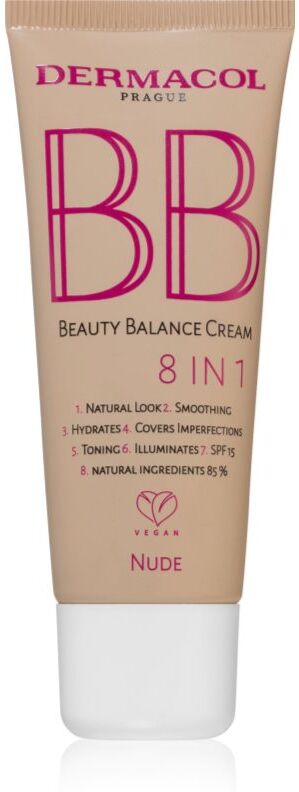
Dermacol Beauty Balance moisturising BB cream SPF 15 N.2 Nude 30 mlDermacol Beauty Balance, 30 ml, Tinted Moisturisers for Women, Are you looking for a product that gives your skin both instant beautification and sufficient care in one step? The Dermacol Beauty Balance is the tinted product for you, thanks to its combination of decorative and nourishing benefits. It gives your skin the hydration it needs, but also covers any imperfections and evens out its overall shade. Characteristics: evens skin tone it protects the skin against harmful external influences gives skin the necessary hydration covers minor skin blemishes ensures a natural look Ingredients: vegan product How to use: Apply every morning to a clean face and rub in thoroughly.5,20 £*Shipping: 3,99 £Secure redirect to the provider
-
Why do heptan-1-ol molecules and water molecules not mix?
Heptan-1-ol molecules and water molecules do not mix well because heptan-1-ol is a nonpolar molecule, while water is a polar molecule. Nonpolar molecules are not attracted to polar molecules, so they do not easily mix. Additionally, heptan-1-ol is hydrophobic, meaning it repels water, further preventing the two substances from mixing. This is due to the difference in the polarity and intermolecular forces between the two substances. **
-
How are molecules formed?
Molecules are formed through chemical bonding between atoms. Atoms can either share electrons to form covalent bonds or transfer electrons to form ionic bonds. The type of bonding that occurs depends on the elements involved and their tendency to gain, lose, or share electrons. Once atoms are bonded together, they form a stable structure known as a molecule. **
-
Search for dipole molecules.
Dipole molecules are molecules that have a separation of positive and negative charges within the molecule. This separation creates a dipole moment, which results in the molecule having a positive end and a negative end. Examples of dipole molecules include water (H2O), hydrogen chloride (HCl), and ammonia (NH3). These molecules are important in various chemical reactions and interactions due to their polar nature. **
-
How are molecules recognized?
Molecules are recognized through specific interactions between their chemical structures and complementary binding sites on other molecules. This recognition process involves the formation of non-covalent bonds such as hydrogen bonds, van der Waals forces, and electrostatic interactions. The shape, size, and charge distribution of molecules play a crucial role in determining their recognition by other molecules. Additionally, specific functional groups and chemical properties can also contribute to the recognition process. **
* All prices are inclusive of VAT and, if applicable, plus shipping costs. The offer information is based on the details provided by the respective shop and is updated through automated processes. Real-time updates do not occur, so deviations can occur in individual cases. ** Note: Parts of this content were created by AI.